Serving Plattsburgh, NY and surrounding areas. (518) 219-1514

Plattsburgh Insulation
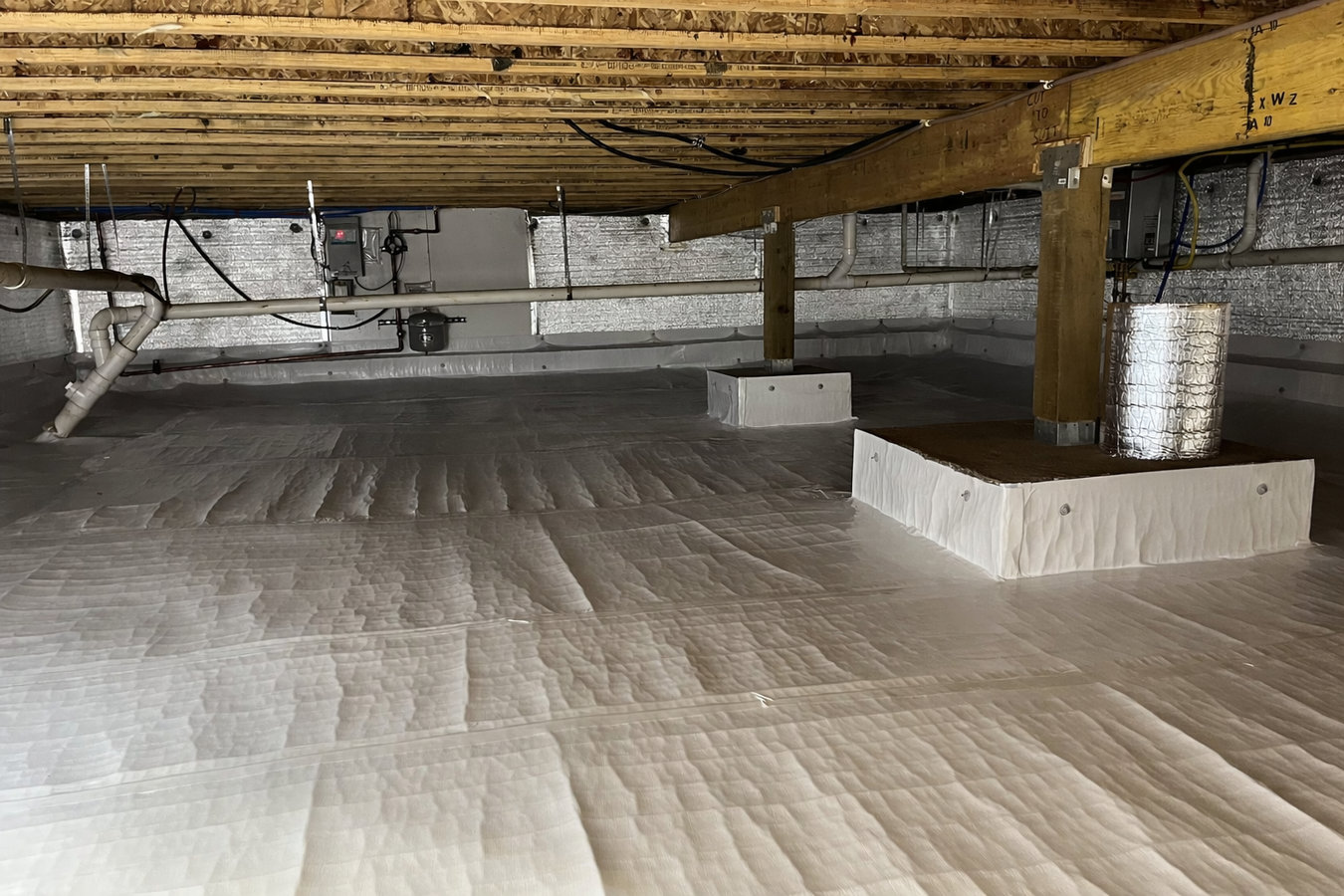
Ground moisture rising into your crawl space damages floors, breeds mold, and drives up heating costs. A properly installed vapor barrier stops it at the source.
Crawl space vapor barrier installation in Plattsburgh involves laying heavy plastic sheeting across the crawl space floor and sealing it up the foundation walls to block ground moisture, most jobs take one day and you stay in your home throughout.
When the ground below your home stays wet - after snowmelt, heavy rain, or just a typical Plattsburgh spring - that moisture has nowhere to go except up. Without a barrier, it rises through the dirt floor, soaks into wood framing and floor joists, and eventually makes its way into your living space as musty air and cold floors. The problem compounds quietly for years before most homeowners notice it. If you already protect other parts of your home, pairing a vapor barrier with crawl space insulation gives you complete protection from both moisture and heat loss.
The good news is that the fix is straightforward. A properly installed barrier covers every inch of the crawl space floor, runs several inches up the walls, and has every seam overlapped and taped. Once it is in place, the moisture stays in the ground where it belongs, and you stop worrying about what is happening underneath your floors.
If your house develops a damp, earthy odor each year right after the snow melts, that smell is almost certainly coming from your crawl space. Plattsburgh's heavy snowpack and spring thaw push a lot of moisture into the ground at once, and if your crawl space floor is bare dirt or has an old barrier, that moisture rises straight up into your living space. The smell is your home telling you something is wrong below.
When moisture rises from an unprotected crawl space, it gets absorbed by the wood framing and subfloor above it. Over time, that wood swells, softens, and can begin to rot. If you notice spots where your floor feels spongy underfoot or where floorboards have started to warp or separate, moisture from below is a likely cause - and waiting makes the repair far more expensive.
If you have ever peeked into your crawl space and noticed water droplets on pipes or metal ducts, the air down there is too humid. In Plattsburgh's climate, this is especially common in late spring and early summer when warm, moist air meets cold surfaces underground. Left alone, that condensation feeds mold growth and corrodes metal components.
Take a flashlight and look into your crawl space access hatch. If you see bare dirt, torn or crumpled old plastic sheeting, or gaps where the foundation wall meets the floor, your moisture protection has failed. This is especially common in Plattsburgh homes built before the 1980s, where original construction rarely included any crawl space protection at all.
We install vapor barriers for all types of homes in the Plattsburgh area - from older pre-1980s houses with bare dirt crawl spaces to newer construction that just needs a barrier upgrade. Every installation uses heavy-duty polyethylene sheeting with sealed seams and wall termination, so you get a continuous moisture block rather than a patchwork fix. If your crawl space has existing torn or deteriorated material, we remove it before the new barrier goes in. For homes near Lake Champlain or in low-lying areas where moisture pressure is higher, we recommend thicker barrier material rated for demanding conditions. We also pair vapor barriers with vapor barrier installation services for basements and other foundation areas that need the same protection.
Every job includes a walkthrough at the end - either in person or with photos from inside the crawl space - so you can see exactly what was installed and confirm there are no gaps or exposed areas. We document the work in writing, including the material specs and any warranty, before we leave. The U.S. Department of Energy recommends vapor barriers as a core part of crawl space moisture management for homes in cold and mixed climates like northern New York.
Suits most Plattsburgh homes - a sealed polyethylene barrier across the crawl space floor and up the walls.
Best for homes near Lake Champlain or in low-lying areas where ground moisture pressure is elevated.
Ideal for pre-1980s homes where deteriorated original material needs to come out before a new barrier goes in.
Combines moisture blocking with thermal protection - the most complete solution for homes with cold floors and high heating costs.
Plattsburgh averages more than 70 inches of snow a year, and when that snow melts in April and May, the ground becomes saturated quickly. Because the soil is often still partially frozen below the surface, that meltwater has nowhere to drain - it just pushes upward into whatever is directly above it. For homes with bare dirt crawl spaces or old, degraded barriers, that means moisture is actively entering the structure every single spring. A significant portion of the city's housing was built before moisture protection was standard practice, so many Plattsburgh homes have crawl spaces that have never had a proper barrier installed. Homeowners in Beekmantown, NY and Schuyler Falls, NY face the same seasonal challenges and benefit from the same solution.
The proximity to Lake Champlain raises the water table in many Plattsburgh neighborhoods, which makes the moisture challenge more persistent than in drier inland areas. Even during dry summers, homes within a mile or two of the lake can have crawl spaces that stay damp. Plattsburgh's six-month heating season also means any moisture degrading your insulation is costing you money every month from November through April. Addressing the crawl space is one of the most direct ways to improve both your air quality and your energy costs in this climate.
We respond within one business day. We will ask a few basic questions about your home and any moisture symptoms you have noticed to come prepared with the right materials.
We go under your home and assess the full crawl space - checking floor size, existing material condition, any moisture damage, and wall coverage. You get a written estimate before any commitment.
The crew removes any old torn material, then lays new heavy-duty sheeting across the floor with overlapping seams taped tight and sheeting run up the foundation walls. Most jobs finish in one day.
We walk you through the finished work - with photos from inside the crawl space - and hand you written documentation of what was installed. All old material leaves with us.
Free estimate, no obligation. We respond within one business day.
(518) 219-1514Every estimate starts with a physical inspection - we go under your home, take photos, and tell you exactly what we find. No phone quotes, no guesswork. You get a clear picture of what is down there before you decide anything.
We have worked in Plattsburgh and Clinton County through enough spring thaws and wet summers to know how local soil and proximity to Lake Champlain affect what each home needs. That local context shapes the materials we recommend and how we install them.
You receive written records of the barrier thickness, seam details, and any warranty before we leave. This protects you at resale and gives you proof that the work was done to a specific standard - not just a contractor's word.
Every crawl space starts with a free written estimate after we inspect the space in person. You get a clear scope and price before any work begins, and we coordinate any permits your project requires with the local building department.
Every one of these details matters because vapor barrier work happens in a space you will rarely see again. We want you to leave every job with proof it was done right - not just a handshake and a hope.
Full vapor barrier service for basements and other foundation spaces beyond the crawl space.
Learn MoreAdd thermal protection on top of moisture control for complete crawl space performance.
Learn MoreSpring snowmelt fills our calendar fast - call now to lock in your date before the rush.