Serving Plattsburgh, NY and surrounding areas. (518) 219-1514
Plattsburgh Insulation
Hidden gaps in your attic floor let your heat escape all winter. Sealing them means a warmer home, lower heating bills, and fewer ice dams on your roof.
Attic air sealing in Plattsburgh means finding and plugging the gaps, cracks, and openings in your attic floor that let heated air escape from your living space, most jobs take one to two days and require no demolition or renovation work inside your home.
Most homeowners think of their insulation as the main defense against heat loss - but insulation only slows heat moving through solid materials. It cannot stop air flowing freely through the cracks around light fixtures, plumbing pipes, and wall tops in your attic floor. In Plattsburgh, where temperatures drop into the single digits and stay there for weeks, those gaps are working against you around the clock. Homes built before 1980 are especially likely to have dozens of unsealed penetrations that have never been addressed. Pairing attic air sealing with comprehensive air sealing services gives you the most complete picture of where your home is losing conditioned air.
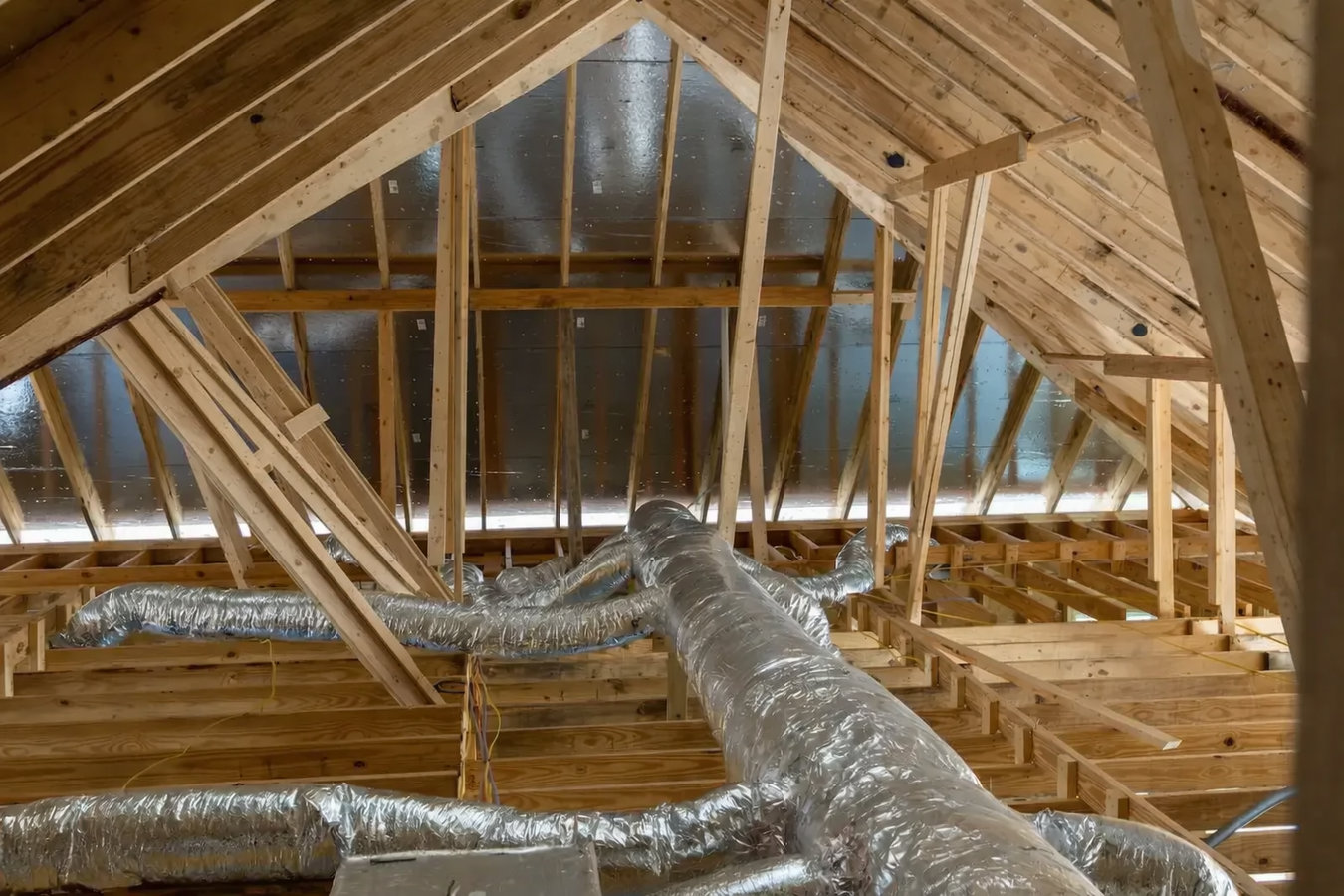
The work itself happens entirely above your ceiling. A contractor uses caulk for small cracks, expanding foam for medium gaps, and rigid foam board or sheet metal for larger openings like those around chimneys and furnace flues. When the job is done, nothing is visible from inside your home - but the difference shows up on your heating bill and in how your house feels on the coldest mornings.
Ice dams - those ridges of ice along your roof edge that can force water under your shingles - are a classic sign that warm air is escaping through your attic and melting snow unevenly. Plattsburgh's heavy snowfall and long cold snaps make ice dams a recurring problem for many homeowners here. Attic air sealing removes the heat source that causes them rather than just treating the symptom each winter.
If the bedrooms or hallways closest to your ceiling feel noticeably harder to heat than the rooms below, warm air is likely escaping through the attic floor above them. This is especially common in Plattsburgh's older two-story homes, where the attic was never sealed when the house was first built. You may notice it most on the coldest January nights when the temperature gap between inside and outside is at its greatest.
The pull-down attic stair or hatch cover is one of the most common air leak points in any home. If you stand near it on a cold day and feel cool air coming down, or see light around the edges when it is closed, warm air is escaping and cold attic air is coming in. This is one of the easiest problems to fix and one of the most commonly overlooked by contractors who only address the obvious spots.
If your National Grid bill climbs steeply every November and stays high through March, and your home still does not feel fully warm, conditioned air is escaping somewhere. Plattsburgh winters are long, and a home with significant attic air leaks can lose a surprising amount of heat before it ever reaches your living space. High bills paired with comfort complaints are one of the most common reasons homeowners in this area call for an assessment.
We seal attics in homes throughout Plattsburgh and Clinton County, working methodically across the attic floor to address every penetration - not just the ones near the hatch. That means gaps around recessed lights, plumbing stacks, electrical wires, wall top plates, chimneys, and furnace flues, sealed with the right material for each opening. When retrofit insulation is being added at the same time, sealing always comes first - so the insulation can do the job it was designed for rather than sitting on top of leaks.
The U.S. Department of Energy estimates that air leaks account for 25 to 40 percent of the energy used for heating and cooling in a typical home - which is why sealing comes before insulating in any well-executed energy upgrade. New York State, through NYSERDA, offers rebates for qualifying air sealing work done by approved contractors, and the federal government offers a tax credit for energy efficiency improvements - ask us whether your project qualifies before you commit.
Suits most Plattsburgh homes - every penetration through the attic floor addressed systematically, from hatch to ridge.
Best for older homes where the gap around the chimney chase is one of the biggest heat loss points in the building.
Ideal for homes with can lights in the ceiling below the attic, which are among the most common air leak sources.
Quick, high-return fix for homes where the pull-down stair or hatch cover is letting conditioned air straight into the attic.
Plattsburgh sits in Clinton County in the North Country, where heating degree days are among the highest in New York State and average winter temperatures regularly drop into the single digits. That means the gap between your warm living space and your cold attic is extreme for five or six months of the year - and every unsealed crack is working against you around the clock. A significant share of Plattsburgh's housing stock was built before 1980, including homes in neighborhoods around the former Plattsburgh Air Force Base and the older downtown blocks. Those homes were built before modern energy codes existed, and their attics often have dozens of unsealed penetrations that were never addressed. Homeowners in Morrisonville, NY and Beekmantown, NY face the same climate conditions and the same housing-stock challenges.
Plattsburgh's location near Lake Champlain also means the area experiences significant humidity in warmer months and repeated freeze-thaw cycles through the shoulder seasons. These cycles cause building materials to expand and contract, which gradually widens gaps and cracks in attic framing over time. Homes that were adequately sealed years ago may have developed new leaks simply from the movement of the structure. National Grid serves Plattsburgh for natural gas and electricity, and the combination of cold winters and local utility costs means that air leaks in your attic translate directly into higher monthly bills - making this one of the most practical improvements a Plattsburgh homeowner can make.
We ask a few basic questions - the age of your home and any comfort issues you have noticed. Most inquiries get a response within one business day, and we schedule a visit with no pressure to commit.
A technician spends time in your attic - not just a glance through the hatch. They check every penetration, assess the current insulation, and look for moisture or ventilation concerns. Some jobs use a blower door test for a measurable before-and-after comparison.
You receive a clear written estimate listing what will be sealed, which materials will be used, and the total cost. If the project qualifies for NYSERDA rebates or federal tax credits, we walk you through those numbers before you sign anything.
The crew works from your attic floor down, sealing each gap with the right material for its size. Most jobs finish in a single day. When they are done, a walkthrough covers what was sealed and answers any questions - no curing period, your home is fully usable immediately.
Free estimate. No pressure. We will tell you exactly what your home needs and what it will cost - including any NYSERDA rebates you qualify for.
(518) 219-1514The biggest leaks in most attics are around chimneys, recessed lights, and wall top plates - areas that take time and skill to address properly. We work through every penetration on the attic floor, not just the ones near the hatch. You get photos of the completed work so there is no guessing about what was done.
New York State offers real rebates for qualifying air sealing work, and many Plattsburgh homeowners do not realize they are eligible. When you work with us, we walk you through what is available and handle the documentation - so you get the financial benefit without chasing paperwork.
We work in Plattsburgh year-round and understand the housing stock here - older construction with complex framing, freeze-thaw damage to existing seals, and the specific leak patterns that show up in Clinton County homes. That local knowledge means fewer surprises on your job.
A common mistake is sealing an attic without checking ventilation first. We assess soffit and ridge ventilation as part of every job, because a properly sealed attic still needs to breathe the right way. The Building Performance Institute sets the national standard for this kind of whole-home energy work.
Attic air sealing is one of the highest-return improvements you can make to a Plattsburgh home - and it is most effective when it is done thoroughly, with the right materials, by people who know what to look for. That is what we show up to do on every job.
Add insulation to existing walls, attics, and crawl spaces without tearing anything apart - the logical next step after air sealing.
Learn MoreWhole-home air sealing that addresses leaks throughout the building envelope, from the basement rim joist to the attic floor.
Learn MoreThe heating season starts early up here - call us now to lock in your appointment and go into winter with a home that actually holds heat.