Serving Plattsburgh, NY and surrounding areas. (518) 219-1514

Plattsburgh Insulation
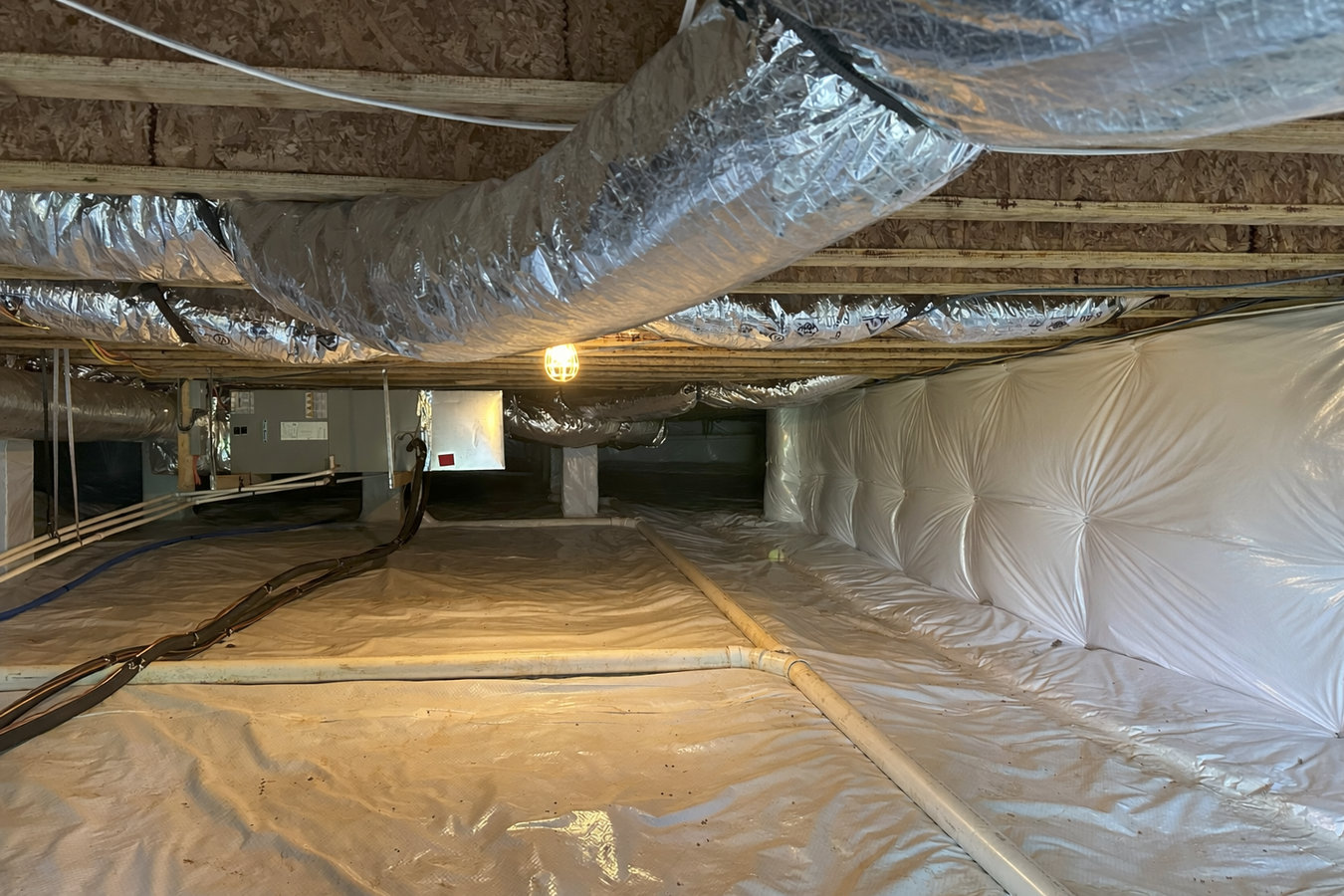
Cold floors, frozen pipes, and heating bills that don't add up often trace back to a crawl space that isn't properly insulated. We fix the root cause so your home holds heat through even the coldest North Country winters.
Crawl space insulation in Plattsburgh acts as a thermal blanket between the cold ground and your living space above, reducing heat loss through the floor and protecting pipes from freezing. Most jobs take one full day.
Without it, cold air and moisture from the soil work their way up through your floors, making rooms feel drafty and forcing your heating system to work harder than it should. Plattsburgh's winters - long, cold, and accompanied by freeze-thaw cycles that push moisture into crawl spaces - make this a problem that gets worse every year you put it off.
If your crawl space has existing wet or damaged material, we'll handle removal first. And if moisture control is part of the solution, pairing this work with a proper crawl space vapor barrier ensures the new insulation stays dry and effective for years.
If you walk across your kitchen or living room floor on a January morning and it feels noticeably cold through your socks, the crawl space below is likely letting cold air in. In Plattsburgh winters, where temperatures regularly stay below freezing for weeks at a time, a poorly insulated crawl space can make the first floor of your home feel like a different season than the rest of the house.
If your gas or electric bill has gone up over the past few winters but your usage habits have not changed, heat loss through the floor could be a major reason. Plattsburgh homeowners heating through long North Country winters are especially vulnerable to this - even a modest improvement in crawl space insulation can show up as a real reduction on your monthly bill.
If you can safely peek into your crawl space and see insulation hanging down, discolored, or simply absent in sections, that is a clear sign the current setup is not doing its job. Old fiberglass batts in particular absorb moisture over time and lose most of their insulating value once wet - they look intact but they are not working.
If you had a frozen or burst pipe under your home during a cold snap, that is a direct sign your crawl space is not insulated or sealed well enough for Plattsburgh winters. Pipes freeze when the space around them gets cold enough - and if it happened once, it will happen again unless the underlying insulation problem is fixed before next winter.
The right approach depends on your crawl space conditions. Some homes need floor joist insulation - the traditional method of putting insulation between the wooden beams above the crawl space. Others are better served by full encapsulation, which seals the entire crawl space and turns it into a controlled environment. We also handle wall insulation for homeowners who want to address heat loss across the whole building envelope at once.
Moisture management is part of every job we do in this area. If ground moisture is getting into your crawl space, insulation alone will not solve the problem. We pair insulation with vapor barrier installation and assess drainage conditions before we start - because in a climate like Plattsburgh's, those steps are not optional. If existing insulation is already wet or failing, crawl space vapor barrier installation typically follows once the space is cleared and dried.
Best for dry, vented crawl spaces where insulating between the wooden beams above the crawl space is the right solution.
Ideal for homes with moisture issues or older vented crawl spaces that need to be converted into a sealed, conditioned environment.
Suited for any crawl space where ground moisture needs to be controlled before insulation can do its job effectively.
Right for homes with sagging, wet, or pest-damaged material that needs to be cleared out before anything new goes in.
Plattsburgh sits in Clinton County in the North Country, where average January lows regularly drop below 10 degrees Fahrenheit and the heating season stretches from October into April. A poorly insulated crawl space isn't just uncomfortable - it puts pipes at real risk of freezing and makes your first floor feel cold no matter how hard your furnace runs. The area's proximity to Lake Champlain adds another complication: the humidity that comes with that geography doesn't stay outside. Crawl spaces in lower-lying parts of the city can accumulate ground moisture and humidity that destroys insulation from below - and a vapor barrier on the crawl space floor is not optional in this environment.
Many of the homes we work on in Schuyler Falls and Peru were built before 1970 and have original or no crawl space insulation - fiberglass batts that have sagged, gotten wet, or been disturbed by pests over the decades. Freeze-thaw cycles throughout the winter and early spring shift soil and push moisture into crawl spaces in ways that don't happen in warmer climates. Homeowners who notice new dampness or frost in their crawl space after a hard winter should treat it as a signal to act before the next heating season. The ENERGY STAR program provides homeowners with guidance on crawl space sealing standards that apply to homes in cold climates like ours.
When you reach out, we'll ask a few basic questions about your home - size, age, any moisture or pest history. We reply within one business day and schedule your assessment visit quickly before the heating season gets busy.
A contractor visits and physically examines your crawl space - checking existing insulation, moisture levels, ventilation, and access conditions. This visit typically takes 30 to 60 minutes, and we'll walk you through what we found before quoting anything.
After the assessment, you get a written breakdown of what work will be done and what it will cost. If a permit is required for your project, we will flag that upfront and explain who handles it. Take your time - we won't pressure you to sign the same day.
Most crawl space jobs take one full day. We remove old material, install a vapor barrier if needed, and put in the new insulation. Before we leave, we walk you through what was done - with photos if the space is hard to access yourself.
Free estimate. No pressure. We'll tell you exactly what your crawl space needs.
(518) 219-1514Skipping the moisture step and just adding insulation is one of the most common crawl space mistakes. We assess moisture conditions first and recommend the right fix - whether that means a vapor barrier, improved drainage, or both - so your insulation actually lasts.
From older homes near downtown to postwar-era houses farther out in Clinton County, we know the crawl space conditions that come with homes built in this area. Local knowledge means fewer surprises once we get into your space.
In New York, crawl space work that changes the building envelope often requires a permit. We know when permits apply, handle the application, and make sure the work is on record. The New York State Department of State oversees home improvement contractor registration statewide.
Not every crawl space needs a full encapsulation, and not every crawl space can get by with just floor joist insulation. We explain the options, the tradeoffs, and the costs clearly - so you make the right call for your home, not the most expensive one.
Every crawl space job we complete in Plattsburgh follows the same approach: inspect first, address moisture, install the right material, and leave the space in a condition you can verify. That consistency is how we make sure you're not dealing with the same problems again in two years.
Keep heat inside your home's living spaces by insulating exterior and interior walls.
Learn MoreControl ground moisture in your crawl space so your insulation stays dry and effective long-term.
Learn MoreWith Plattsburgh winters arriving fast, now is the time to get your home protected before the first hard freeze. Call us or request a free estimate online.